Why the Borg are the best villain in Star Trek (and what went wrong after TNG)
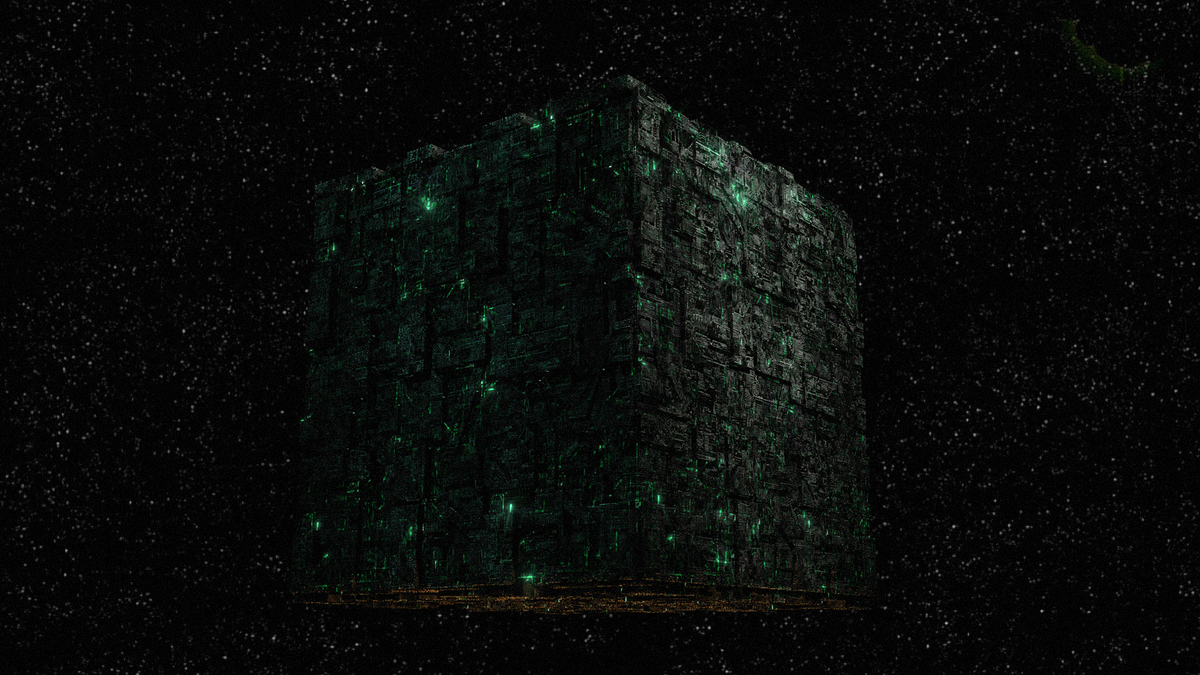
The Borg are the best villain in the entire Star Trek franchise. No Dominion, no Klingon Empire, nothing else even comes close. They are the ultimate enemy. From their very first appearance in TNG, I was fascinated by them, and to this day I believe the Borg remain one of the strongest concepts ever introduced in the Star Trek universe. A faceless enemy you cannot negotiate with. The options are simple: you fight, or you get assimilated.
What impresses me most is the enormous difference in technology and philosophy. If we assume the Federation is a Kardashev Type I civilization, the Borg easily fit the profile of a Type II. The best example is Wolf 359 — a single Borg cube tears an entire fleet to pieces with almost no effort. That’s a demonstration of absolute technological dominance.
In my opinion, the biggest mistake the franchise ever made was introducing the Borg Queen. Instead of keeping the Borg mysterious, faceless, and relentlessly procedural, they grounded them by turning the Collective into a hive structure run by a single leader. I understand why First Contact did it — a movie needs a central antagonist — but the cost was immense: it fundamentally broke the original concept of the Borg.
Before Voyager and First Contact, the Borg were a terrifying machine of assimilation and expansion. A collective with the intellectual power of billions of minds operating as one. Afterward, they were “nerfed” — from being an unstoppable cosmic force, they became a group of relatively simple drones following the whims of a queen who claims she “brings order to chaos.” The terrifying godlike swarm was reduced to a mid-level villain.
The true power of the Borg always lay in their concept: they don’t need to invent new technologies. They simply assimilate what already works. This raises important philosophical questions. Without individual consciousness and creativity, can innovation even exist? My logical conclusion is that creativity would indeed suffer — there is no spark, no individual genius. But innovation might still exist through brute force. The Collective can dedicate practically unlimited resources to testing every possible approach to a problem until one of them works. It’s a different model from the human one, but still a valid path to advancement.
In TNG, the Borg were portrayed as a civilization that — given enough time — could assimilate the entire galaxy. The logical next step would be intergalactic expansion: reaching Andromeda, and then moving even further into deep extragalactic space. That direction was wide open, waiting to be explored, but the franchise chose to take a different turn.
This is why I would absolutely love to see a parallel-universe story (like the Mirror Universe) where the Borg never had a queen. A universe where they remained what they originally were: a cold, faceless, relentless machine of assimilation and strategic domination. It would be fascinating to see how the Federation would evolve technologically, tactically, and psychologically when faced with such a version of the Borg — a threat you cannot understand, cannot negotiate with, and cannot easily defeat.